
Happy days for the Woodingdean Kestrels - Nuffield Hospital Woodingdean
For the past 15 Years the Nuffield Hospital in Woodingdean has been home to a pair of Kestrels. The Kestrels nest in a box on a South East Facing wall about 3 stories up. The Staff and patients at the hospital watch each year as the couple arrive, lay eggs and then fledge the young birds.
This year however things have been very different. A few weeks ago the female kestrel died in the nest leaving behind 4 chicks who sadly also died from starvation. Hospital staff were devastated and it was expected that the pining male would either fly off for the year or simply ‘die of a broken hear’. But we are delighted to report that, unusually, thr male kestrel found himself a new mate who is now sitting on four eggs laid sometime in the past few days (between the 16th and 21st June). Kestrel eggs incubate for between 27 and 29 days – they are laid at two or three day intervals. Hatching is expected to begin around the 14th July. Kestrels usually lay their eggs in late April or Early May!
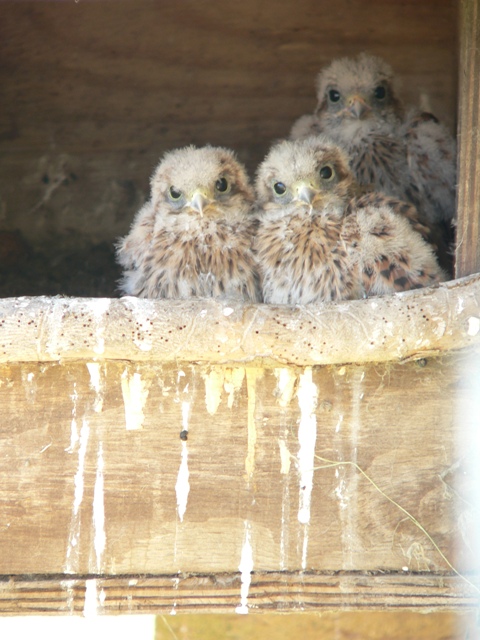
Update 28 July - you can see a pic of the gorgeous chicks woodingdeaninbusiness.co.uk/uploads/image001
This late laying will result in a delay to the Nuffields planned building work to the East Wing so as not to disturb the birds until they have quite literally flown the nest.
If you would like to visit the hospital to see the Kestrels you are most welcome. The Nuffield is open from 6.30 every morning and you can have clear sight of the box from the viewing area outside the café. The café serves Costa Coffee, tea and a range of snacks and sandwiches. Feel free to ask reception about any updates they may have on ‘nest developments’ and to point out the nesting box. They will be only too happy to help.
Kestrals – What you need to know
‘The Kestral is fully protected under the Wildlife and Countryside Act 1981 – it is an offence to kill, injure or take a kestrel or to take, damage or destroy an active nest or its contents'. (RSPB)
They are between 25-35cm in length and have a wingspan of 60-65cm
The Male (or tercel) has chestnut brown upperparts, a speckled breast, a blue/grey head and tail. The tail has a single black bar across the tip
The female is darker than the male and has a brown barred head and tail.
Kestrels do not build their own nests, they use old nests of other large birds such as crows and pigeons or the eggs are laid on a hole in a tree, a crevice in a wall . The Nuffield Kestrals nest in a purpose built wooden box style nest. Eggs are usually laid in April at two or three day intervals and a pair of birds will usually hatch from 3 to 6 young. Eggs incubate for between 27 and 29 days and take a further 27-39 days to fledge
Kestrels need to eat about a fifth of their body weight in one day – they hunt by day and by sight – they can see and catch a beetle 50m for a perch. They tend to hunt during the day – often storing their cache to eat just before dusk – never going to bed on an empty stomach!
The kestrels call is a ‘kee-kee-kee’
Kestrels hover by facing into the wind and flapping their wings to keep absolutely stationary.
The Nuffield Hospital is on Warren Road, Woodingdean and as well as being home to the Kestrels also lays claim to having the worlds deepest hand dug well in its grounds. There is information about the well in the reception area.